 Book now
Is the Brancacci Chapel worth it? What thirty minutes inside is like
An honest look at a short, small, capped visit: who will love it, who may not, and how to get the most from it.
Florence asks a lot of a visitor's time. The Uffizi, the Accademia, the Duomo and the Pitti Palace each want half a day, and the Brancacci Chapel is across the river, small, and open to you for only thirty minutes. So is it worth it? For most people who care about painting, yes, without much hesitation: this is the room where the Renaissance in painting starts, and you can stand in it with no more than thirty people. But it is not for everyone, and it rewards preparation more than almost any other sight in the city. This guide sets out honestly what the visit is like, who will get the most from it, who may not, and how to make thirty minutes count.
What you actually see
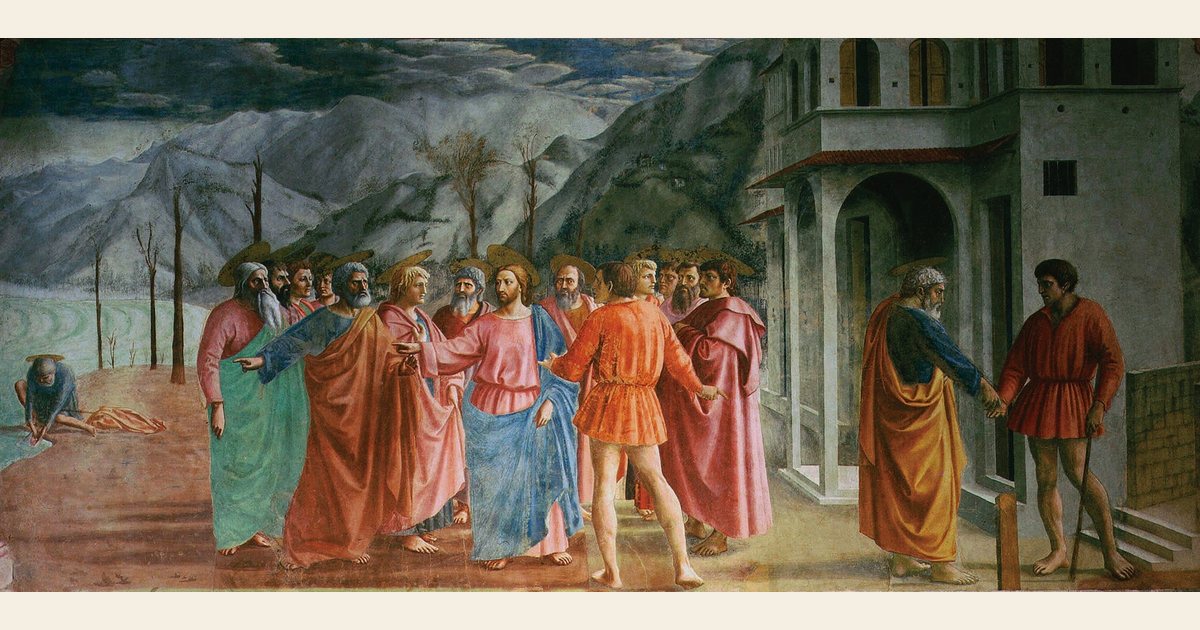
The chapel is a single small room. Its walls are covered, in two bands, with the Stories of St Peter painted by Masolino and Masaccio in the 1420s and completed by Filippino Lippi in 1481–83. On the entrance pilasters are Adam and Eve: Masolino's calm Temptation and Masaccio's Expulsion, with Adam hiding his face and Eve crying out. On the left wall is the Tribute Money, nearly six metres wide. Behind the altar, around a tall window, are scenes of Peter preaching, baptising and healing, and on the altar a thirteenth-century Madonna.
Everything is close. You do not need binoculars, and you can see every scene from the middle of the floor. The colours, cleaned in a restoration completed in 1990, are brighter than most reproductions suggest.
Why it matters
In a few years in this room, Masaccio, in his early twenties, painted figures that stand on the ground with real weight, lit by a light that comes from a single direction, in spaces built to a single vanishing point. Painters had been reaching for this since Giotto a century earlier. Masaccio made it look natural.
Everyone who came after noticed. Vasari, the sixteenth-century biographer of artists, called the chapel a school for the world. The young Michelangelo came here to draw; one of his drawings after the figure of Peter in the Tribute Money survives in Munich. For this reason the chapel is sometimes called the Sistine Chapel of the early Renaissance.
What thirty minutes feels like
You enter with your group at your booked time, up to 30 people, and you have up to 30 minutes. It feels brief, because it is. A visitor who walks in cold can spend the first ten minutes working out which scene is which and who painted it.
A visitor who has read about the frescoes beforehand has a different visit. They go to the Expulsion first, then the Tribute Money, then the altar wall, and they spend the time looking. Read our scene-by-scene guide before you go and you will find thirty minutes is enough. Many people leave wishing they could come back, and some do.
Who will love it
Anyone with an interest in painting, and especially in how the Renaissance began. If you have seen Giotto's frescoes, or are going to see Michelangelo's, the chapel is the link between them.
Visitors who find the big Florentine museums overwhelming. The Uffizi has thousands of works; the Brancacci Chapel has one room and one story. It is a concentrated, quiet visit in a small group, and that can be a relief.
Anyone staying in or exploring the Oltrarno. The chapel fits into a half day with Santo Spirito, and from Saturday to Monday the ticket also includes the Fondazione Salvatore Romano, with Orcagna's great Crucifixion in the refectory of Santo Spirito.
Who may not
If you have one day in Florence and have never seen the Uffizi or the David, those will probably come first. The chapel rewards a second or third day more than a first.
If you dislike small, enclosed rooms or crowds, note that a full group of 30 fills the chapel. If you are travelling with young children, remember that under-12s must be accompanied by an adult, and that a half hour of frescoes is a long time for a small child. Under-18s enter free, so the cost of bringing teenagers is only their time.
If you want a long, slow visit with the paintings, the 30-minute limit will frustrate you. It is a conservation rule and is not waived.
How it compares with other sights
Compared with the big museums, the chapel is small and short, and almost entirely about one cycle. That is its strength. You see the frescoes where they were painted, in the light they were designed for, rather than in a gallery.
Compared with other fresco chapels in Florence, the Brancacci has the advantage of a strict cap on numbers and a fixed time. You will not be pushed along by a crowd, but you will be asked to leave when your half hour ends.
Booking without stress
Every visitor needs a dated, timed ticket, including the under-18s who enter free. The museum releases entry times in blocks: when we checked in October 2026, dates to 31 December 2026 were on sale and 2027 had not yet been released. Popular times fill first.
With us you choose your date and entry time and pay one price in your currency; we book the ticket in your name and send you the e-ticket by email. If your date is not on sale yet, or is full, our waiting list holds it at no cost and we contact you when we can book. Tickets cannot be changed once booked, so choose a date you are sure of.
The chapel in seven dates
1423: Felice Brancacci, a merchant back from an embassy to Cairo, commissions frescoes of the life of St Peter for his family's chapel in the Carmine. Around 1424: Masolino and the young Masaccio begin work. September 1425: Masolino leaves for Hungary; Masaccio continues alone.
1427: the work stops. Masaccio dies in Rome in the summer of 1428, aged 26. 1436: Brancacci is exiled for opposing Cosimo de' Medici, and the chapel is left half finished. 1481–83: Filippino Lippi completes the cycle.
1771: fire destroys the interior of the Carmine church but spares the chapel. 1990: a long restoration is completed, removing centuries of grime and the fig leaves added in 1642, and revealing the original colour.
Common worries, answered
Is it just a chapel in a church? It is in a church, but it is visited as a museum, with its own entrance through the cloister, its own timed ticket and a guard on the door. You will not be competing with a service or a stream of people walking in from the street.
Will I see the paintings properly? Yes. The room is small and well lit, and every scene is visible from the floor. The upper register is above eye level, so stand back a little to see it straight on.
Is it all the same saint in different robes? It can feel that way if you arrive unprepared. Read a scene-by-scene guide first and you will recognise each episode in a few seconds: the tax collector's orange tunic in the Tribute Money, the shivering young man in the Baptism, the shadow falling on the sick.
What if my dates are not on sale yet? The museum releases dates in blocks. Our waiting list holds your date without payment and we book when it opens. If nothing opens, you are not charged.
Questions to ask yourself before booking
Will I be in Florence on a day other than Tuesday, and not on the first Sunday of the month? Can I be at Piazza del Carmine at a fixed time, with a margin? Do I want to read about the frescoes beforehand, so that thirty minutes is enough? Would I enjoy a walk through the Oltrarno to Santo Spirito afterwards?
If the answer to most of these is yes, the Brancacci Chapel is likely to be one of the visits you remember best from Florence. If not, it may be one to save for a second trip.
How to prepare in ten minutes
You do not need an art-history degree. You need three things in your head when you walk in. First, the story: the life of St Peter, framed by Adam and Eve at the entrance. Second, the hands: Masolino's figures are graceful and light, Masaccio's heavy and shadowed, Filippino Lippi's crisp and crowded with portraits. Third, the two pictures you must not miss: the Expulsion on the left-hand entrance pilaster and the Tribute Money on the left wall above.
With that, everything else falls into place. You will notice that the light in Masaccio's scenes falls from the direction of the real window behind the altar. You will find Peter three times in the Tribute Money, once crouching by the lake. You will see the shadow passing over the sick men beside the altar, and the young man shivering as he waits to be baptised.
If you want to go one step further, read our guide to the Tribute Money. It takes ten minutes and covers the perspective, the light and the thirty-two days of plaster, and it will change the way you see the rest of the room.
Making the most of it
Read about the frescoes the evening before. Arrive a few minutes early at the cloister entrance at Piazza del Carmine 14. Start in the centre of the room, then go to the Expulsion, the Tribute Money and the altar wall. Leave Filippino Lippi's scenes and Masolino's Tabitha for the second half, and finish where you started.
Pair the visit with a walk to Santo Spirito, and on Saturday to Monday with the Fondazione Salvatore Romano. Avoid Tuesday, when the chapel is closed, and the first Sunday of the month, which is not sold online.
Frequently asked
Is the Brancacci Chapel worth it?
For anyone interested in painting, yes. It is where Masaccio changed Western painting, seen in a small group, where it was painted.
Is 30 minutes enough?
If you read about the frescoes beforehand, yes. Without preparation it can feel rushed.
Is it suitable for children?
Under-18s enter free, and under-12s must come with an adult. Thirty minutes of frescoes suits older children better than young ones.
Should I see the Brancacci Chapel or the Uffizi?
On a first, one-day visit, most people choose the Uffizi. On a second day, the chapel is one of the most rewarding visits in Florence.
Is it crowded?
Groups are capped at 30 people for 30 minutes, so it is never more crowded than that.
What is the best time to visit?
Any available entry time. On Saturday to Monday choose a time that leaves room to see the Fondazione Salvatore Romano the same day.